









































A powerful earthquake struck eastern Afghanistan late on Sunday night, leaving widespread devastation across villages near Jalalabad and claiming the lives of more than 800 people. At least 2,500 others were injured, according to figures released by the Taliban authorities.
The tremor, measured at magnitude 6.0, hit shortly before midnight, its shallow depth of just eight kilometres intensifying the destruction. The epicentre was recorded 27 kilometres northeast of Jalalabad, a vibrant trading hub close to the border with Pakistan.
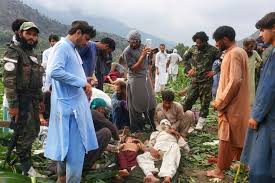
Entire communities in the mountainous provinces of Kunar and Nangarhar have been flattened. In Kunar alone, the Disaster Management Authority reported that at least 250 people were confirmed dead and 500 more injured across several districts. Rescue efforts are still underway, with officials warning that the true scale of the tragedy may yet be far worse.
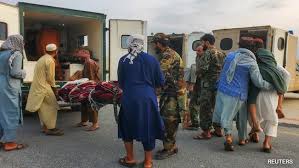
Medical workers have been dispatched from Kabul and neighbouring provinces to support overwhelmed local hospitals. Sharafat Zaman, spokesperson for the Ministry of Public Health said,
Many villages have been wiped out completely. Casualty figures continue to rise as emergency teams reach remote areas,
Jalalabad, home to roughly 300,000 residents but surrounded by countless rural communities, has long been known for its busy markets, farmland and citrus orchards along the Kabul River. Yet much of its housing stock—mud-brick homes and poorly reinforced low-rise buildings—stood little chance against the force of the quake.
The disaster could not have come at a more difficult time for Afghanistan. The country is already grappling with economic collapse, dwindling humanitarian support, and the return of tens of thousands of Afghans expelled from neighbouring states. The earthquake has once again laid bare the vulnerability of a nation perched on one of the world’s most volatile seismic fault lines.
Afghanistan has a grim history of deadly quakes. Just last year, a series of tremors in October killed thousands in the west of the country. Experts point to the Hindu Kush mountain range, where the Indian and Eurasian tectonic plates collide, as the source of the frequent and often catastrophic seismic activity.
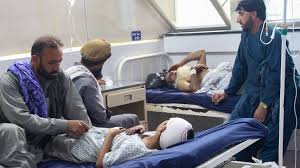
For survivors in Kunar and Nangarhar, the immediate concern is not history but survival. With homes destroyed, families displaced, and hospitals stretched to breaking point, communities are bracing for long weeks ahead—mourning their dead while struggling to piece their lives back together.


[5939]tk222 Login PH – Download APK at Legit Slots GCash,Mag-tk222 login ph na para sa legit slots gcash withdrawal. I-download ang APK at kunin ang online casino bonus for beginners. Maglaro na ngayon! visit: tk222