
















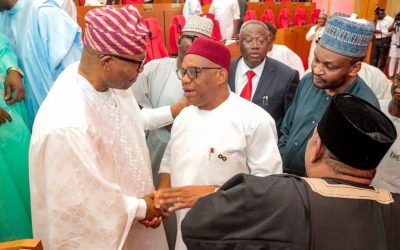
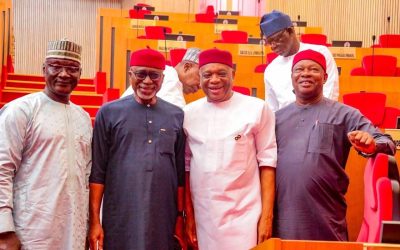









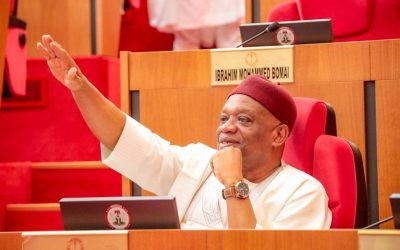












The recent passage of the Constitution Alteration (State Police) Bill, 2026, by the National Assembly marks one of the most significant security reforms in Nigeria’s democratic history. The legislation to decentralise policing by allowing states to establish their own police outfits alongside the federal police structure, is believed to improve intelligence gathering, shorten response time and enhance local crime prevention.
The concept of decentralised security systems, tailored to local contexts and responsive to community-specific challenges, is not new to Nigeria. It took real flesh and blood during the governorship of Orji Uzor Kalu in Abia State from 1999 to 2007. His security architecture, built around locally-controlled security structures and community mobilisation, became so effective that it was even exported to neighbouring states, and till today, remains a template for what modern state-level security management could look like.
The Bakassi Boys emerged from Aba in the late 1990s as traders were tired of living in fear. Armed robberies, bank heists, and early spark of kidnappings had made commercial activities nearly impossible. The traders, frustrated by the failure of conventional police to provide security, took matters into their own hands. When Orji Kalu became governor, he recognised that local communities, when properly organised and backed by government, could provide security more effectively than distant federal forces sometimes disconnected from local realities.
Kalu legalised, structured, and supported the Bakassi Boys, transforming them from a street-managed illegal groups into a quasi-state security apparatus. The results were extraordinary. Armed robbery in Abia, particularly in Aba, dropped dramatically. Bank robberies became virtually non-existent. Kidnapping, which was beginning to terrorise the region, was significantly reduced, or even stopped. The transformation was so complete that Aba, once notorious as a dangerous commercial hub, became attractive to traders from across Africa again.
The success was not confined to Abia State. Because of their success in restoring order to Aba and the state at large, their operations quickly expanded to other states in the southeast, most notably Anambra and Imo. The lesson was clear: when state governments empower and coordinate local security forces rather than relying solely on centralised federal police, communities become safer and more peaceful for citizens to operate.
What made Orji Kalu’s approach particularly noteworthy was not just its effectiveness in reducing crimes, but its ethical foundation. Unlike subsequent uses of community security forces for political persecution or settling political scores by other governors who adopted the initiative afterwards, Kalu’s security architecture was designed explicitly to fight criminals, not opposition politicians or political rivals. The Bakassi Boys targeted armed robbers, kidnappers, and bandits. They were not deployed against opposition voices or used to intimidate political opponents. This distinction is crucial because it shows that security structures, when properly deployed, can serve genuine public interest rather than narrow political agendas.
The senate’s consideration and passage of state police bills essentially validates what Orji Kalu demonstrated in Abia State over twenty-five years ago: that security, to be effective, must be responsive to local conditions and overseen by governments closest to the people.
As Nigeria moves toward stronger state police frameworks, one of the major tasks facing the State Police Service Commission is to study the Abia model under Kalu’s governance. The successes were not accidental; they resulted from thoughtful architecture, genuine commitment to community security, and leadership willing to vest security responsibility in local hands and also guard against human rights abuse. This state police bill represents the legislative codification of principles he demonstrated practically over two decades ago. In this sense, his security vision has not just survived the passage of time, it has been vindicated by the nation’s own recognition that decentralised, community-responsive security structures are necessary for Nigeria’s future.
The National Assembly, particularly the Senate, should not stop at the passage of the bill but ensure it is implemented with the same commitment to ethical governance and genuine public security that characterised Orji Kalu’s approach in Abia State.
C. I. Duke writes from Umunneochi in Abia North.